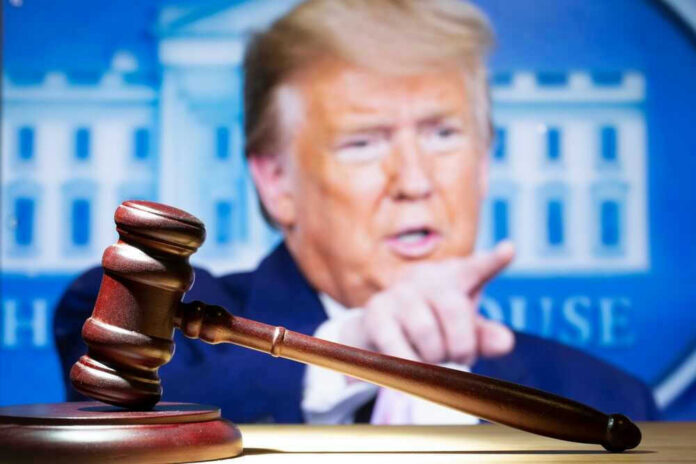
A federal judge ordered the White House to restore CNN, MS NOW, and Politico’s press access, and the reason why cuts to the heart of who gets to stand in the room where power speaks.
Story Snapshot
- A judge issued a temporary order restoring access for CNN, MS NOW, and Politico reporters.
- Trump announced the ban citing “fake news” and “years of false reporting”.
- The outlets sued, claiming First Amendment retaliation and due process violations.
- Key past cases warned the White House against arbitrary press-pass revocations.
What The Judge Did And Why It Matters
A federal judge in Washington ordered the White House to reinstate the hard-pass access of reporters from CNN, MS NOW, and Politico. The order is temporary but immediate. It restores entry to the briefing room, press workspace, and events where hard-pass holders move without escorts.
Early reporting notes the court leaned on due process grounds and did not need to decide the full First Amendment claim at this stage. That narrow step still packs a punch, because access shapes coverage in real time.
The White House had deactivated the reporters’ credentials after President Trump announced a ban. He said the outlets pushed “fake news” and warned others could be next.
The White House then issued a statement tying removal to “years of false reporting,” and argued that publishing is protected but a hard pass is not a right.
The courtroom disagreed on process, which is often how press cases get won: not with grand theories, but with rules the government must follow.
How We Got Here: The Ban And The Backlash
Trump’s post said the ban was “effective immediately,” and reporters soon found their passes did not work at Secret Service checkpoints. The three outlets filed suit in federal court and asked for an emergency order. Their complaint said the ban punished their speech and broke the government’s own credential rules.
They argued that singling out disfavored coverage crossed a constitutional line. They also said the government gave no fair notice or chance to respond before the cutoff.
The administration replied in public that access is a privilege, not a right, and that standards of professionalism matter on secure grounds. That argument has surface appeal. The White House must keep order and protect the president. But the legal test does not stop there.
When the government opens a system for newsgathering, it must apply clear and fair rules, and it cannot target viewpoints under the cover of “order.” Courts watch that line closely.
The Law The Judge Likely Leaned On
Two decisions tower over these fights. In Sherrill v. Knight, the District of Columbia Circuit said White House pass denials trigger due process. The court required notice and a reasoned basis before the government can shut the door. That case framed access as a protected liberty interest under the Fifth Amendment. It is not a blank check, but it blocks arbitrary or punitive action.
The useful word in the ruling is “temporarily.”
CNN, MS NOW and Politico get access restored for now. That is an injunction, not a final judgment that the White House can never set press rules. The next fight is whether the ban was a viewpoint penalty or a credential policy.…
— Emmanuel C (@qevra_buzz) September 24, 2026
In Karem v. Trump, the District of Columbia Circuit upheld a district court’s order restoring a reporter’s pass after a brief suspension. The court found the rules were too vague, the penalty too sudden, and the process too thin.
It warned the White House to set clear standards and follow them. The message was simple: you can enforce rules, but you must write them down and apply them evenly.
What This Ruling Signals For Both Sides
For the press, the order is a green light to keep asking hard questions in the room where policy gets made. It does not make reporters noble. It does confirm that government cannot punish coverage by flipping a pass switch.
For the White House, the path is also clear. If it believes certain conduct breaks the rules, it can write bright-line standards, give notice, and use measured penalties that fit the rulebook.
Limited government means power comes with restraints. Process is not red tape; it is the leash that keeps government from picking winners and losers.
If coverage is wrong, the answer is more speech, corrections, and evidence, not selective lockouts. A tough press benefits any administration that intends to persuade the country on the merits.
What Comes Next In Court And Politics
The case will likely move fast to a preliminary injunction hearing. The White House may again argue security and professionalism. The outlets will press the retaliation claim, pointing to public statements about “false reporting” and “fake news.” The judge may push both sides toward a stable, written protocol.
Past fights show the government often loses when it acts first and justifies later, and wins more when it builds clear, neutral rules before enforcing them.
Beyond the courtroom, this clash sets the tone for every briefing and spray. Reporters will test access. A disciplined White House will answer with facts, not bans.
Voters do not need a press they like; they need a press that can show up. The judge’s order puts the chairs back in the room. What they say will decide the rest.
Sources:
journalrecord.com, english.gujaratsamachar.com, reuters.com, politifact.com, courthousenews.com, pbs.org