
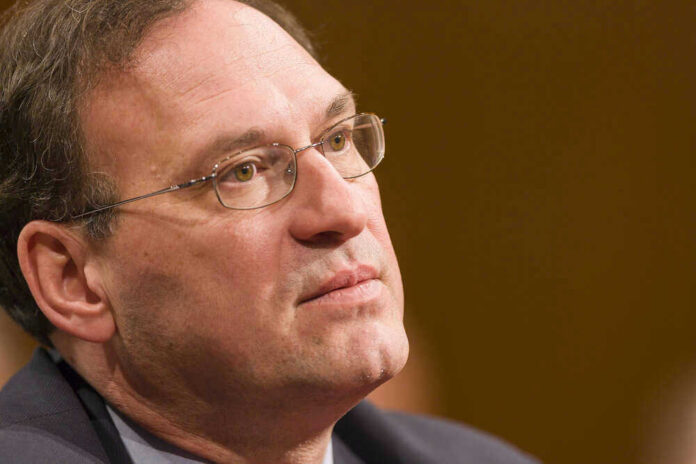
Justice Samuel Alito stepped aside from a headline climate case days before arguments, reshaping a nine-figure legal fight with one quiet sentence.
Story Snapshot
- The Supreme Court clerk told parties that Alito will not participate.
- The notice arrived the week before arguments in Suncor Energy v. Boulder.
- Reports link the step-back to Alito’s energy stock holdings, though no reason was given.
- The case could shape where climate-liability suits against oil companies get heard.
What Alito Did, When He Did It, And Why It Matters
Scott S. Harris, the Supreme Court’s clerk, sent a one-line letter on September 28, 2026. It said Justice Samuel Alito “has determined that he will not continue to participate in this case.” Lawyers on both sides received it days before the October 5 argument date.
Major outlets reported the same event the same day, confirming the recusal and the case: Suncor Energy Inc. v. County Commissioners of Boulder County. The Court did not list a reason, which is common practice.
Alito bows out of blockbuster Supreme Court climate case https://t.co/w6l6i5s4Zo
— POLITICO (@politico) September 28, 2026
The dispute comes from Boulder County and the City of Boulder. They sued Exxon Mobil and Suncor Energy in state court over climate-related harms.
The companies want federal court. The Supreme Court agreed to decide a threshold question that could determine the proper forum nationwide. That choice affects dozens of city and state lawsuits that seek money for past and future climate damage. One Justice stepping aside changes the math and, sometimes, the tone of arguments.
The Quiet Power Of A Recusal In A High-Stakes Case
A Supreme Court recusal removes one vote and can increase the chance of a 4–4 split. A tie would leave the lower court result in place without a national rule. That outcome can matter as much as a win on the merits.
Alito’s step-back came as groups highlighted his ownership of energy company stocks. Reports said he did not hold Exxon Mobil or Suncor Energy shares, but did hold other oil and gas stocks. The letter did not link holdings to the decision.
Federal law tells judges to recuse if they have a financial interest in a party or if their impartiality can reasonably be questioned. That standard applies to the Supreme Court as well, under Title 28 of the United States Code section 455.
Scholars have long noted that Justices almost never explain recusal calls, and no one can review those decisions. The Court’s habit is simple: notify the parties, adjust the calendar if needed, and move on. The Alito notice fits that pattern.
What The Case Is Really About: The Fight Over The Forum
The legal fight centers on where climate-liability claims belong. Cities and counties bring fraud and nuisance claims under state law. Energy companies argue that federal law controls and removes state authority in this lane.
The Supreme Court took a question that tests removal to federal court and the reach of federal preemption doctrines. Congress rarely creates complete preemption, which would shift a state-law case into federal court by force of statute. That rarity raises the stakes for both sides.
U.S. Supreme Court Justice Samuel Alito announced his recusal from the major climate change case Suncor Energy Inc. v. County Commissioners of Boulder County, stepping aside following intense public scrutiny over his personal financial holdings in oil and gas companies#News pic.twitter.com/iIl0D5Sj7E
— PEER COMMUNITY HUB, Our Empowerment Zone! 🇨🇦✌️ (@p_communityhub) September 29, 2026
States and local governments prefer state courts and juries close to home. Oil companies prefer federal courts, which they see as more predictable on national energy policy. Prior climate rulings have limited federal common law claims, pushing parties toward state-law pathways. That pressure makes the forum fight decisive.
A Supreme Court ruling here could open or close doors across the country for similar claims, with consequences measured in billions and in business plans.
How To Read This Moment
Recusal grounded in law and ethics reflects the core idea of rules first, outcomes second. If a Justice believes the statute calls for stepping aside, that is the end of it. The Court’s minimalism on explanations is defensible: the law sets the standard, not public mood.
The stronger case is made in briefs and arguments, not in who sits where. On climate litigation, the cleaner path respects Congress’s design. Federal courts should not invent broad preemption where Congress did not speak clearly.
Voters care about basic fairness and clear rules. The federal recusal statute exists to guard both. The forum question also turns on clarity: if Congress wants national rules for climate torts, it can say so.
Until then, the Court will police the line between federal interest and state power. That balance is not a culture war. It is Constitutional plumbing. Alito’s recusal does not change the pipes, but it could change the water pressure on decision day.
Sources:
abcnews.com, reuters.com, cnbc.com, thehill.com, nytimes.com, cpr.org, politico.com, dailycaller.com, cnn.com, harvardlawreview.org, law.georgetown.edu