

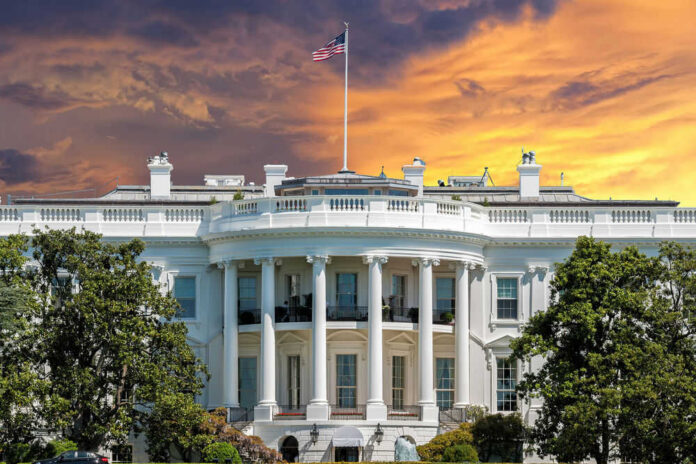
A federal judge cleared the way for President Trump’s massive White House ballroom project to proceed, rejecting preservationists’ lawsuit and exposing how unelected bureaucrats tried to weaponize regulations to block a privately funded upgrade to America’s most iconic residence.
Story Snapshot
- Judge Richard Leon ruled the 90,000 square-foot White House ballroom construction can continue, dismissing National Trust for Historic Preservation claims as insufficient
- The $400 million privately funded project bypasses congressional spending, with donors including Lockheed Martin, Amazon, and Microsoft contributing through a nonprofit mechanism
- Preservationists attempted to halt the demolition of the East Wing using Administrative Procedures Act violations, but the White House Executive Residence office proved exempt from such regulations
- Commission of Fine Arts unanimously approved the project despite overwhelming public opposition, with Trump-appointed board members moving forward amid criticism of the rushed approval process
Judge Rejects Preservationist Overreach
U.S. District Judge Richard Leon delivered a decisive blow to the National Trust for Historic Preservation, denying their request for a temporary restraining order against the White House ballroom construction.
The judge ruled that the preservation group’s claims lacked sufficient legal foundation, specifically noting they failed to argue the project exceeded presidential authority.
Leon’s decision allows underground construction to proceed immediately, with above-ground work potentially beginning in April 2026.
This marks the second time Leon has refused to block the project, signaling judicial deference to executive branch operations and recognizing that internal White House projects operate outside typical federal regulatory frameworks.
Trump takes victory lap after judge allows construction of his $400M ballroom to continue for now https://t.co/gisNalOcY7 pic.twitter.com/jTTSDrN7X1
— New York Post (@nypost) February 26, 2026
Private Funding Circumvents Congressional Roadblocks
President Trump secured $400 million in private donations for the ballroom project, effectively bypassing the congressional appropriations process that typically strangles infrastructure improvements with red tape and political maneuvering.
Major corporations, including Lockheed Martin, Amazon, and Microsoft, funneled contributions through a nonprofit organization to the National Park Service, which then transferred funds to a presidential maintenance account.
Judge Leon described this funding mechanism as a “Rube Goldberg” contraption during January 2026 hearings, yet the complex arrangement proved legally sound.
This innovative approach allows Trump to deliver a permanent venue for state dinners and diplomatic events without burdening taxpayers or waiting years for congressional approval, demonstrating executive efficiency over bureaucratic paralysis.
Demolition Proceeded Despite Regulatory Complaints
Construction crews began demolishing portions of the East Wing in October 2025, moving swiftly before the National Capital Planning Commission or Commission of Fine Arts received formal submissions.
This aggressive timeline sparked outrage among preservationists who claimed Trump violated federal guidelines protecting the White House as a National Historic Landmark.
However, the Justice Department successfully argued that the White House Office of the Executive Residence operates as a non-agency under the Administrative Procedures Act, exempting it from the bureaucratic review processes that typically delay federal projects for years.
The rapid demolition reflects Trump’s commitment to action over endless regulatory review, prioritizing results over appeasing unelected preservation officials who treat historic buildings as museums rather than functional government facilities.
Oversight Commissions Stacked With Trump Allies
The Commission of Fine Arts unanimously approved the ballroom design on February 19, 2026, despite Secretary Thomas Luebke acknowledging public comments were “overwhelmingly in opposition.”
Trump had previously fired and replaced commission members, ensuring a board aligned with his vision for White House modernization. Critics characterized the 90,000 square-foot structure as oversized and architecturally inappropriate, claiming it would overshadow the executive residence itself.
The National Capital Planning Commission, reportedly staffed with Trump-appointed allies, is scheduled to vote in early March 2026. While opponents decry this as political manipulation, supporters recognize it as necessary leadership to overcome institutional resistance from preservation advocates who prioritize aesthetic concerns over functional government needs and diplomatic hosting capabilities.
Judge rules construction of Trump's White House ballroom can continue for nowhttps://t.co/6aOhwhrsFE
— Sean Spicer (@seanspicer) February 26, 2026
The legal battle may continue if the National Trust amends its lawsuit to include “ultra vires” arguments claiming the project exceeds presidential authority, though Judge Leon’s rulings suggest such efforts face significant procedural obstacles.
Trump celebrated the decision on Truth Social, though he inaccurately claimed the lawsuit was completely dismissed when Leon actually allowed potential amendments.
The ballroom will replace temporary tents currently used for large state functions, providing a permanent, dignified venue befitting America’s role on the world stage while ending decades of makeshift solutions that reflected poorly on presidential hosting capabilities.
Sources:
Judge again refuses to block Trump’s White House ballroom project – Politico
Judge rules construction of Trump’s White House ballroom can continue for now – CBS News